


Garten of Banban 2
Euphoric Brothers Games
I approached Garten of Banban 2 as a compact mobile adventure rather than as a casual game to dip into for a few seconds. It is the official mobile game connected to the Garten of Banban series, developed by Euphoric Brothers Games, and its appeal depends heavily on whether you enjoy exploring an unsettling setting, working through puzzles, and following a strange story at your own pace. My overall impression is that it is aimed at players who want a recognizable horror-adventure experience on a phone, not at people looking for a relaxed, endlessly replayable pastime.
The game is available for $2.99, so the decision is straightforward in one important way: this is a paid download, not a free trial built around repeated purchases. That price makes the question less about avoiding advertisements or managing a free-to-play economy and more about whether the adventure itself is worth paying for. I found that distinction useful because the game’s value comes from the atmosphere and the act of uncovering what happens next, rather than from long-term progression or a large collection of separate activities.
Exploring the darker side of Banban’s world
A direct continuation for fans of the setting
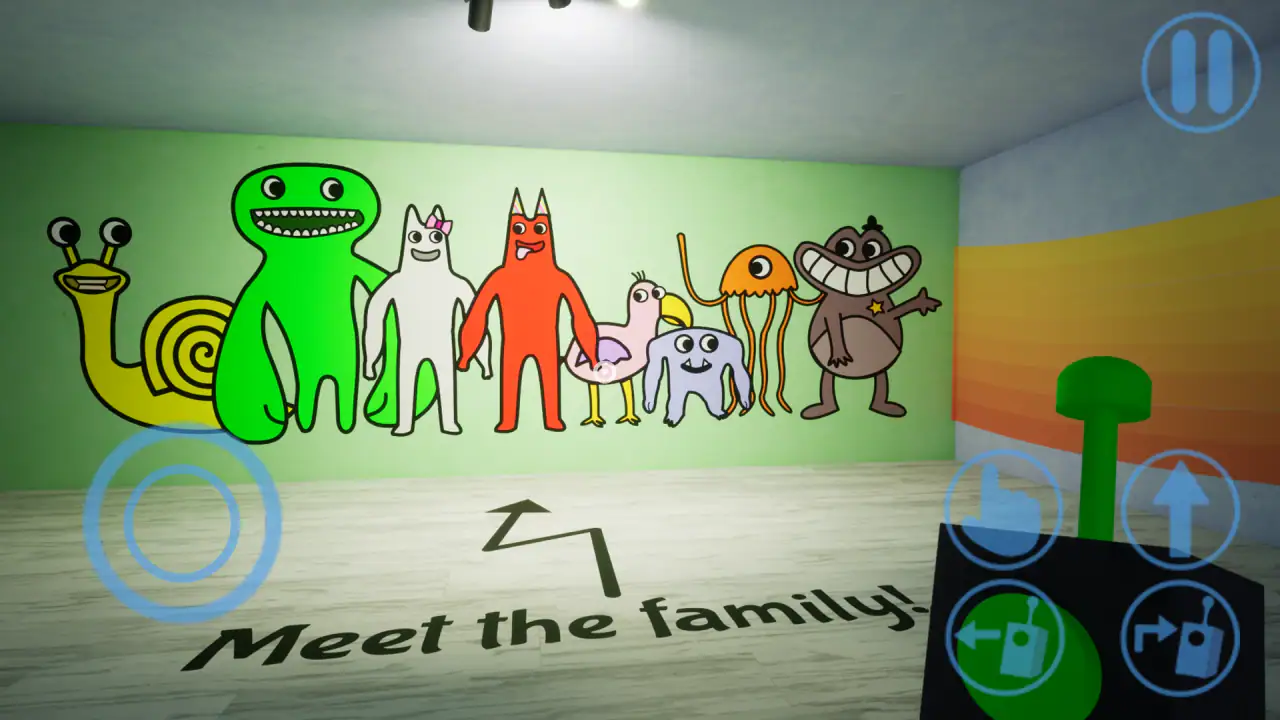
The strongest reason to play is simple: you already like the world of Garten of Banban and want another chapter in it. The game is presented as an adventure with a creepy tone, familiar characters, and an environment designed to make ordinary spaces feel suspicious. I would not describe it as a pure action game. The experience is more about moving through locations, paying attention, solving problems, and deciding where to look next.
That structure gives the game a different rhythm from a typical mobile title. Instead of constantly rewarding quick taps or short matches, it asks me to observe the surroundings and remember what I have seen. A door, object, room, or character can matter later, so rushing through the environment can make the game feel more confusing than it needs to be. My best advice is to treat each area like a small investigation rather than a corridor between dramatic scenes.
The Teen content rating is also important when deciding who should play. The unsettling presentation and horror-oriented mood are not a good fit for every child, even if the colorful character designs initially make the game look less serious. Parents should judge the tone for themselves rather than assuming that a bright visual style means the experience is suitable for younger players.
Related News






What the mobile format does well
Playing on a phone makes the adventure easy to pick up when I have a quiet stretch of time. It works particularly well in situations where I want something more involved than a puzzle app but do not want to commit to a large console or computer game. A short evening session can be enough to make progress, while the chapter-based feeling gives the experience a clear sense of direction.
Touch controls naturally change how the game feels compared with playing a similar adventure on a larger platform. The screen is also where the environment, movement, and interactions all compete for attention, so I prefer playing when I can hold the phone steadily and focus. It is less enjoyable as a background activity while commuting, watching television, or constantly switching between applications.
One useful habit is to slow down whenever a room looks unusually empty. In an adventure built around exploration, empty space can still communicate where the game expects attention. I found that checking corners, entrances, and nearby objects before moving on reduced unnecessary backtracking. This is not a shortcut that removes the puzzles; it is simply a better way to read the level design.
Gallery
How the adventure rewards attention
The game’s main strength is its atmosphere. Its strange characters and uneasy locations create curiosity, and curiosity is what kept me moving forward. I wanted to understand the relationship between the places I visited and the events unfolding around them. That feeling is more valuable here than technical spectacle because the experience depends on the question of what is waiting in the next area.
I also appreciated that the game encourages active observation instead of treating the player as someone who only follows a glowing marker. When I paused to examine the environment, I felt more involved in solving the space itself. A practical approach is to remember the layout of each area before interacting with anything important. If I became stuck, mentally retracing the route was often more useful than tapping randomly.
Another non-obvious trade-off is that the same atmosphere that makes the game memorable can make mistakes feel more frustrating. When the surroundings are intentionally confusing or tense, it is easy to lose track of the next objective. I recommend keeping a simple note of unusual objects, blocked paths, and rooms that seem unfinished. That small habit turns the game from a vague search into a manageable investigation.
Value at a paid price
At $2.99, I judge this as a focused purchase rather than a complete entertainment platform. The price is easier to justify if you already know that you enjoy the Garten of Banban style and want a story-driven mobile adventure. It is harder to justify if you expect a game that can occupy you indefinitely, offer many unrelated modes, or provide the same kind of replay value as a competitive or procedural title.
The paid model changes how I evaluate every minute of the experience. I do not expect a small adventure to compete with a much larger game, but I do expect the central journey to feel purposeful. For me, the purchase makes sense when the goal is to experience this particular chapter, not to obtain a general-purpose game for every mood.
There is also a practical advantage to paying once for a defined adventure: I can begin playing without first learning an economy, waiting for energy, or planning around repeated spending. That does not automatically make the game better, but it makes the cost easier to understand. The question is simply whether the atmosphere, exploration, and story are enough to earn that one-time price for you.
Where the experience can lose momentum
The game is not the right choice for someone who dislikes searching. Adventure games often ask players to notice small details, and this one can feel slow when I am not in the mood to investigate. If I want immediate action, rapid progression, or a clear objective every few seconds, I am likely to find the pace restrictive rather than intriguing.
Its horror presentation can also divide players. The strange, colorful look may attract people who enjoy stylized suspense, but it will not satisfy someone searching for realistic horror or a deeply frightening survival experience. Conversely, players who are sensitive to creepy characters and tense environments may find the tone uncomfortable even though the presentation is not built around conventional realism.
Mobile controls are another consideration. Touch input is convenient, but it can feel less precise than a controller or keyboard when I need to move carefully and interact with objects under pressure. I would choose a larger screen when possible, especially for a longer session. On a small phone, visual details and interactive elements can be easier to overlook, which increases the chance of wandering in circles.
One of the clearest trade-offs is between accessibility and immersion. A phone is always close by, so the game is easier to start than a console adventure. At the same time, notifications, limited screen space, battery concerns, and an unstable grip can interrupt the mood. I get the best experience by using headphones, silencing distractions, and playing in a comfortable seated position rather than treating it like a quick waiting-room game.
Who will get the most from it
I would recommend it first to existing fans of the series who want to continue exploring its unusual world. It also suits players who enjoy compact horror adventures, environmental puzzles, and stories that reveal themselves through movement and discovery. If you like games where the setting itself feels like part of the mystery, this is a more natural fit than a conventional arcade title.
A realistic everyday use case would be an evening when I have enough time to focus but do not want to begin a huge role-playing game. I can pay for the download, settle in with headphones, and work through the next section without needing to maintain a long-term character build. That makes it a good companion for a player who values a specific mood and a contained journey.
I would be more cautious about recommending it to someone buying a first mobile game for a young child. The Teen rating should be taken seriously, and the game’s unsettling atmosphere may be a poor match for children who prefer cheerful exploration. I would also steer competitive players elsewhere because the appeal here is not rankings, multiplayer competition, or repeated skill-based matches.
Players who want a broad collection of activities should consider another adventure game, especially one built around open exploration, character development, or extensive replay systems. This title is more specialized. Its value comes from its identity, not from trying to serve every kind of mobile player.
How it compares with common alternatives
Compared with free-to-play mobile adventures, the paid approach is refreshingly easy to understand. I am not evaluating it around optional purchases or a system designed to keep me returning for daily rewards. Instead, I am deciding whether this particular story and atmosphere deserve the download price. That makes it a better fit for someone who prefers a defined purchase over a free game that may ask for more attention later.
Compared with larger console or computer horror adventures, the mobile version is more convenient but naturally feels more limited as a platform experience. A phone cannot provide the same physical scale or control comfort as a dedicated setup. Its advantage is immediacy: I can play the game without being tied to a television or desk. If portability matters more to me than maximum immersion, that exchange is reasonable.
Compared with ordinary puzzle games, it offers more context and tension around the problems I solve. The puzzles are not isolated exercises; they are part of an environment with characters and a continuing mystery. The trade-off is that I cannot expect the clean, instantly readable design of a minimalist puzzle app. Here, confusion and atmosphere are part of the intended experience.
Practical advice before purchasing
Before buying, I would first ask whether I am interested in the Garten of Banban universe itself. The game’s official connection to that series is a major part of its appeal, so people with no interest in the setting may not receive the same value as returning fans. The short description is simply “Garten of Banban 2,” which makes the game’s identity clear but does not replace knowing whether this particular style of adventure appeals to me.
I would also check the device requirement. The game supports devices running Android 8.0 or later, and the current version is 1.0. That makes compatibility an important first step before purchase. After installing, I would close unnecessary apps, free some working space, and avoid beginning the game during a situation where interruptions are likely. These habits do not change the content, but they make a touch-controlled horror adventure much less awkward.
If I became stuck, I would resist repeatedly interacting with the same object. Instead, I would walk back through the last few rooms and look for a newly accessible route, an overlooked item, or a visual clue that I dismissed too quickly. This approach preserves the satisfaction of solving the problem and prevents the experience from turning into random tapping.
For players who dislike spoilers, I suggest avoiding detailed videos and community discussions until finishing a section. Mystery is one of the reasons to play, and seeing a character, location, or solution out of context can weaken the tension. On the other hand, if a puzzle becomes genuinely tiring, a small hint from a trusted source is a better compromise than abandoning the game entirely.
My buying decision
After weighing the price against the type of experience it offers, I see this as a targeted recommendation rather than an automatic one. The paid download is reasonable for fans who want a focused mobile chapter in the Garten of Banban setting. It is also a sensible choice for players who prefer atmosphere, exploration, and story over endless content.
I would skip it if I wanted a free game, a long-term progression system, competitive play, or a relaxed experience suitable for all ages. The Teen rating, searching-heavy structure, and touch-screen limitations are not minor details; they shape whether the game feels enjoyable or inconvenient. Choosing a different adventure would be better if I need expansive replay value or more precise controls.
For me, the final verdict is that Garten of Banban 2 earns consideration as a paid, series-focused adventure. Its best moments come from wondering what a suspicious location means and taking the time to inspect it properly. Its weakest moments appear when I want faster progress or clearer direction. With an average rating of 3.8 from around 4.5 thousand ratings and more than 100 thousand installs, it has found a real audience, but those figures do not remove the need to match the game to the right player.
My recommendation is to buy it when you specifically want a creepy Banban adventure on mobile; otherwise, skip it rather than expecting a broad all-purpose game. That is the fairest way to judge its $2.99 cost: not by the size of the app category, but by whether this particular atmosphere and chapter are exactly what you want to play.
FAQs for Garten of Banban 2
What is Garten of Banban 2?
Garten of Banban 2 is a first-person horror and adventure game that continues the mysterious story introduced in the original title. You explore an abandoned kindergarten, search for clues, solve environmental puzzles, and encounter strange characters along the way. The game combines colorful cartoon visuals with unsettling scenes, creating an experience aimed at players who enjoy suspense, exploration, and light puzzle-solving.
Is Garten of Banban 2 suitable for children?
Although Garten of Banban 2 uses bright colors and a childlike kindergarten setting, it is still a horror game. It includes frightening creatures, chase sequences, tense sounds, dark environments, and disturbing imagery that may be unsuitable for younger children or sensitive players. Parents should check the age rating available for their region and, if necessary, review gameplay before allowing a child to play.
How does the gameplay work in Garten of Banban 2?
The main gameplay focuses on exploring different areas, collecting information, interacting with objects, and completing puzzles that unlock new paths. You must pay attention to the environment and follow clues rather than relying only on combat, since the game is primarily about investigation and survival. Some sections also require avoiding or escaping enemies, which adds pressure to the exploration.
Can Garten of Banban 2 be played offline on Android or iOS?
The game is generally designed as a single-player experience, so the main story does not require online multiplayer or communication with other players. However, an internet connection may still be needed for downloading the game, installing updates, restoring purchases, or displaying advertisements, depending on the platform and version. It is best to launch it once online before attempting to play without a connection.
Does Garten of Banban 2 contain advertisements or in-app purchases?
The availability of advertisements and in-app purchases can vary according to the Android or iOS release, region, and store listing. Some mobile versions may include optional purchases, advertising, or paid access to remove certain limitations. Before downloading, check the official store page for current pricing and purchase information. Also make sure your device has enough storage and meets the required performance specifications for smooth gameplay.
Pros
- Exploration feels more open and varied than in the first game.
- New characters add mystery and keep the story moving.
- Simple controls make it accessible for casual players.
- Environmental clues reward players who inspect rooms carefully.
- The unsettling atmosphere works well with headphones.
Cons
- Some puzzles offer little guidance and may feel confusing.
- Character animations can look stiff or unfinished at times.
- The story leaves several questions unanswered by the ending.
- Backtracking can make progress feel slower than necessary.
- Performance may vary across older phones and tablets.


